


Find the Art Inside the Block
As iron sharpens iron, so one person sharpens another.
- Proverbs 27:17
A pick or chisel hitting stone, chips away a sliver at a time to shape, reduce, and create something new from something unfinished. A large block of granite slowly, under the slow but insistent chiseling by Michelangelo Buonarroti became the statue David, or the Pietà. Beautiful, admired works of art. But the block had to endure hours and hours of slow, careful chipping. As well, David endured hours of back-breaking exertion, breathing in fine particles of marble. He endured it because (as he and many sculptors and artists have claimed) Michelangelo saw the statue inside that block of granite.
He only needed to carefully free it from its prison.
A good brother or sister walking with us as we try our best to follow Jesus, is like that sculptor. It costs them to speak up, to call us out, to hang out, listen to and pray for us, to love us even with our mess laid out before them. Because they see the perfect creation hidden inside that messy block. They see the vulnerable child behind the walls we have erected around us. A good friend, as we have discussed in earlier devotionals, makes us better. You, in return, make them better. You often see exactly what God sees as possibilities in their life before they do.
Deep, man. Real deep.
I know, sorry. Let’s talk about art some more.
Righteous.
I always have wanted to be a writer. It took a long time to try it. I didn’t have anyone telling me I’d be good at it except a teacher or two. Eventually I knew to start on that road I needed to get with other writers, like-minded people who wanted to improve their craft and who, in turn, wanted to help me in mine. These were the folks who often succeeded, who put others’ needs and skill-sharpening before themselves. Yes, there were others in the writer’s group I had started who came and went quickly and for whom the act of writing never worked out. This was often because they came to get feedback, but never give anything back. Sharpening each other, building someone up takes a give-and-take between two or more people, where each wants the other(s) to succeed.
The employee who works to make his boss successful, succeeds. The boss who works to make his subordinate succeed, is the successful boss. Round and round. Iron sharpening Iron. Sculptors seeing the finished product inside the block before they start. An artist knowing the composition, even if in a general sense, as they begin to paint or draw.
An artist’s worst enemy, and a tool our spiritual enemy uses often, is fear. Fear of not being good enough or not being qualified to sharpen anyone else.
A successful artist is one who jumps into the work, seeing a goal and moving toward it (even if that goal only that he or she wants to make start something that will bring them joy but no other details). A successful writer is someone who writes, even when they aren’t sure what words will appear on the page that day. When Michelangelo began his greatest works, he had an image and worked towards it. He is an exception when it comes to many great artists, however. Van Gogh did not always know what he was going to paint when sat down to work. Yes, there were landscapes he felt compelled to put on canvas but according to people that have studied him, he did not always know what he was going to paint when he began. All he knew is that he needed to start. Stephen King rarely knows how a book will end when he begins writing (nor do I, to be honest), but rather enjoys “treating writing like archeology” and looking for that “fossil buried in the ground.”
The trick, one might say, is that even when they do not know where their artistic endeavor might lead them, they are not afraid to start and see where the process takes them.
When I was asked to lead a small group at church (we call them “Connect 4” groups), my first reaction was, Who am I to think I can lead or teach these men anything? If not me, then who? If not now, then when? If we want to be sharpened, to be built up in our walk with Jesus, the first step (after reading his Word and prayer) is to help someone else. I’ve been stumbling along this path to keep up with Jesus’ example, sometimes barely holding onto the hem of his robe, for decades. I’ll never get it right and I’ll never know everything. No one does. But I start. I know that I love these men I meet with, and want them to know You, Lord, more and more. Because of this, I have realized they love me and want me to know You, Lord, more and more.
I am sharpened even as I think I might be sharpening them.
That’s how life works. Imagine our faith walk not as a straight line, but a circle, back and forth we move up the spiral staircase towards becoming who God wants us to be in His Kingdom. We test the waters, try different directions, chip at the blocks of each others’ life (as we desperately hold onto our earlier metaphor) to reveal the true perfection of our friends — free them from the prison this world has built around them with self recrimination, fear, self-doubt, or sin (and think of “sin” in its broadest sense: anything we do which comes between us and a deeper relationship with God, which is pretty much everything… but that’s a discussion for another time).
We are all artists building God’s Kingdom here on Earth, preparing the way for Jesus’ return. Everyone is an artwork waiting to be set free to live with Joy in this Kingdom. Let’s find as many as we can while we have the chance.

Brothers, Sisters, Come on Down…
A friend loves at all times, and a brother is born for a time of adversity.
— Proverbs 17:17
Writing devotionals like these, based on a scripture passage or Gospel reading or quote from the many New Testament letters is an interesting exercise, purely from the writer’s mind and heart but influenced (one hopes) by the Holy Spirit through prayer and mediation. A hundred people could read the same passage and see in it a hundred different messages. This is one way of understanding how the “word of God is living and active, and sharper than any two-edged sword….” (Hebrews 4:12). I write this preface as a check-in between us. My interpretation of any given verse(s) is a sharing of whatever thought or image comes from reading the verse in question. A year from now, an entirely different interpretation could result, because a year from now the Holy Spirit might have something else to say on the matter.
That’s a verbose way of saying your mileage may vary, but I hope these small missives help in some way understand better the nature of being a follower of Jesus.
We all have at least one friend in this world. I pray you do. Perhaps many. The term “friend” is used in so many ways, from an acquaintance at work to someone you can’t wait to call or visit when you get home. A friend is someone who shares an interest, makes you laugh, has been part of your posse for the last fifty years or since school started.
Friends are important because they get us out of the house, share conversation and exchange ideas, call us when they’re worried about something or answer the phone when we need to talk. A friend is a companion in this walk of life. They know us, including what sensitive buttons to not push - or to push. I’ve had a few friends over the years who fit into the latter. Annoying pests, those, but we still consider them our friends because they are who we have chosen to “do life” with.
When our life experience suddenly hits an obstacle: a death in the family, an addiction, a stupid mistake, or any form of pain which has fallen over us… that is where we need more than a friend. We need a brother or a sister.
One might interpret this week’s verse from Proverbs as literally meaning our biological sibling, and in many cases that is exactly what it should mean. Throughout the bible, however, the term “brother” has become ingrained in the language of our faith to mean more. Our brothers and sisters in Christ are people to whom we have tightly wound the thread of our lives, people with whom we have gone far deeper in conversation, revelation and experience, more than one might a “friend.”
There is a fine line between the two, between friend and brother, and it’s a line that can easily be crossed. If you can tell your friend anything, share with her your deepest thoughts, fears, struggles, and trust she will hold it close to her heart and speak healing and comfort back to you, she is a sister as well as a friend. What friend do you think of when you are fighting a storm in your life? Who do first feel the desire to share good news or a joyful moment with? That person(s) is probably more than a friend, he is a brother.
Trust is an important ingredient in cultivating such a relationship. Trust is experiential. Meaning, the experience of sharing Life with someone is what teaches if they can, or cannot, be trusted with knowing the entire “you.”
What deeply personal thing do you struggle with? Think about what that is, and how much it will help to share it with someone else. Now, think about the people you call “friend.” Who of these folks do you think to yourself, I couldn’t tell them this much information. They are still your friend, but there is a level of trust which has not been built between you, or which has been hurt by past experience. Now, think of another friend. Do you think, I should talk with them about this? They might not know how to help, but because of the trust you hold for them to be able to share such an intimate part of your life, you have found a brother or a sister.
Trust takes time. This is what our Connect 4 groups (among others we might be involved in) strive to build. To share our faith, grow closer to Jesus together. Become friends. Share more. Learn to trust, and be trustworthy.
Having more friends is never a bad thing. To love and be loved at all times by someone else is important, today’s Proverb says. But cultivate and consider the importance of a brother and sister in your daily walk. They are like a house built on a solid foundation. When adversity comes they, like Jesus, can be an anchor to get through the storms. Conversely, strive be a friend who builds the trust of another, with sincerity and love. Earn the right to be called sister. To be called brother. The title cannot be forced and you will never be so for everyone.
Pray, however, that the Lord brings you into the lives of those to whom you can be more than a friend. Together we can nurture each other to be brighter lights on that Kingdom hill. Having, and being, a brother or sister is one of God’s greatest gifts in our lives and the lives of those around us.
Talking with Jesus, Like the Original Disciples Did
Therefore confess your sins to each other and pray for each other so that you may be healed. The prayer of a righteous person is powerful and effective.
- James 5:16
The original apostles (Peter, James, John, Matthew et al) are raised up as incredible examples to us as Jesus’ disciples even two thousand years later. Bigger than life. Bible heroes. Pioneers of our faith. In reality, no disrespect intended in any way, they were not bigger than life. They were the same kind of flawed, mixed-up humans as you and I. There are obvious differences, of course, around time and culture. However, we see them as bigger than us because — at the risk of sounding like the Wizard of Oz — they had something you might not have once upon a time.
A heart. No, no. What they had was a direct connection with Jesus, himself. A direct, physical connection with the One who spoke us and our universe into existence. Read that sentence again to comprehend its magnitude. The One who spoke us, and the universe, into existence. James, John and crew walked with him, asked him questions, broke bread with Jesus.
Did they have an advantage over the rest of us because of this? With the obvious exception that, yes, Jesus physically spoke his answers to their questions and they could physically touch the hem of his robe… the answer is no. They had no spiritual advantage over you or I because even now we can speak and learn to hear back from the same One who spoke us into existence. We can hang out, ask questions, and receive answers.
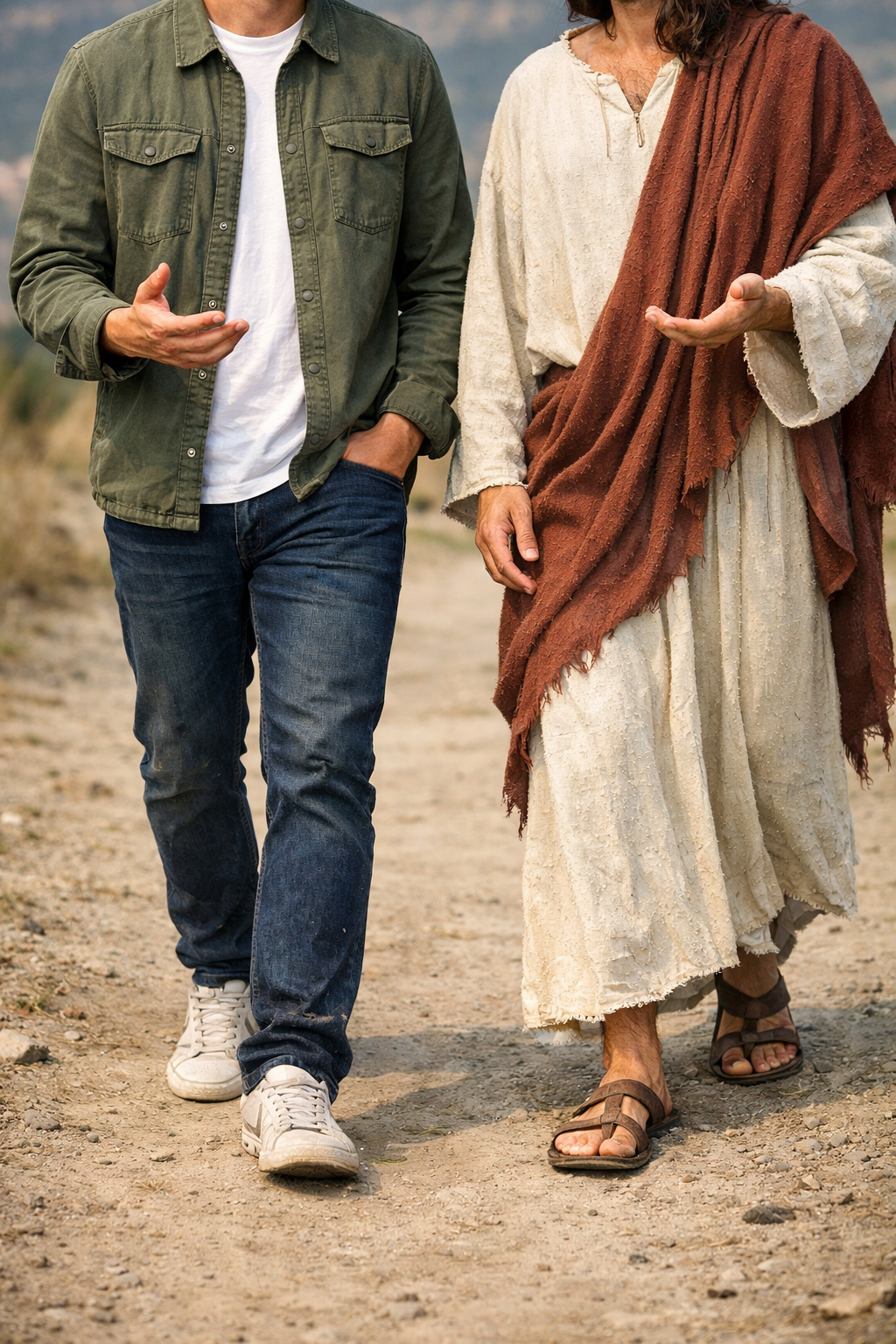
Before Jesus left the physical realm to sit at the right hand of the Father, he gave an example of how his followers could speak to God directly (see Matthew 6:9-13, Luke 11:1-4, along with many times in the Gospels where Jesus speaks to the Father for all to hear). Prayer is first and foremost a conversation. Imagine yourself walking alongside Jesus. There is respect, a deep sense of awe and even fear. But there is also a deep love coming from him, towards you, which signals clearly he is overjoyed to talk with you. There are no bad questions. Your connection to your heavenly Father is the most important thing to him. Given that, prayer as conversation could sound like:
Thank you for the chance to talk. It’s such a nice day. That was you who made it, wasn’t it? Thanks for that. Sorry I haven’t told you about this thing that is troubling me earlier. I mean, it’s ridiculous compared to what you’re dealing with every day.
In that moment, his hand pulls you closer to him and he tells you in no uncertain terms that it is not ridiculous, that everything you have to say to him, every concern you share, reminds him how much he is in love with you.
Well, OK, I need to trust you when you say that, right?
Yes, He says. Yes, you do.
And you talk. About everything.
Recently twenty-plus men from our church came home from a conference on fire for Jesus, committing to each other and our families to lean more in — and take more responsibility for — our families and faith. The highs of the mountaintop have led to some struggles, as “real life” tries to rekindle old habits and behaviors. These men have done something powerful to fight back. A few days before this writing, during a specific time of day and from wherever we happened to be, we prayed for an hour, falling to our knees to ask for strength to keep hold of the promises made during the highs of worship the weekend before, and carry them through the moments of stress and sameness that daily life always brings.
We prayed the same things for each other. Over the weekend some very personal things were shared. Too often the enemy wants to keep our secrets hidden in the dark. Surrendering to Jesus requires everything to be brought out into the light eventually. He knows what we do in shadows, but for our sins (which can be simplified as anything that comes between you and a healthy relationship with Him) should be confessed to each other in order for them to no have no power over us.
James tells us in todays verse, “…confess your sins to each other and pray for each other so that you may be healed.”
If you look at how this translation is phrased, James says two things about prayer: we should pray for each other, and doing this heals us as well.
The best way to stay in the dark, to keep our own hearts as far from Jesus (even if we have surrendered and given our life to him) is to keep our gaze always on ourselves and our troubles. Some inward reflection is healthy; too much makes our own issues and problems seem insurmountable. When we pray for other people, it lifts something from our shoulders, gives us a perspective that we are not the only ones in the world struggling. Most of all draws our hearts closer to Jesus, which always is healing.
Pray for your brothers and sisters in church, at home, in our Connect groups. Think of it as walking and talking with Jesus just as the original followers had done. Because, with the Holy Spirit’s help, it is. Just remember that the conversation can shifted from ourselves, a topic very important to him, to include those around us. Those we love, a stranger, or someone who has hurt us. All of these concerns weave around you and Jesus to become a rich tapestry of conversation and connection, drawing you closer to your Savior, and closer to the people you are talking about.
The best part of the recent men’s conference were not the messages from stage, but conversations with each other. The connections. We’re not perfect. None of us. But prayer is a conversation with Jesus, the One who is perfect and created not only us, but the universe itself. It’s what the original disciples had. It’s what you and I have today.
The Most Important Conversations of Your Life
Carry each other’s burdens, and in this way you will fulfill the law of Christ.
— Galatians 6:2
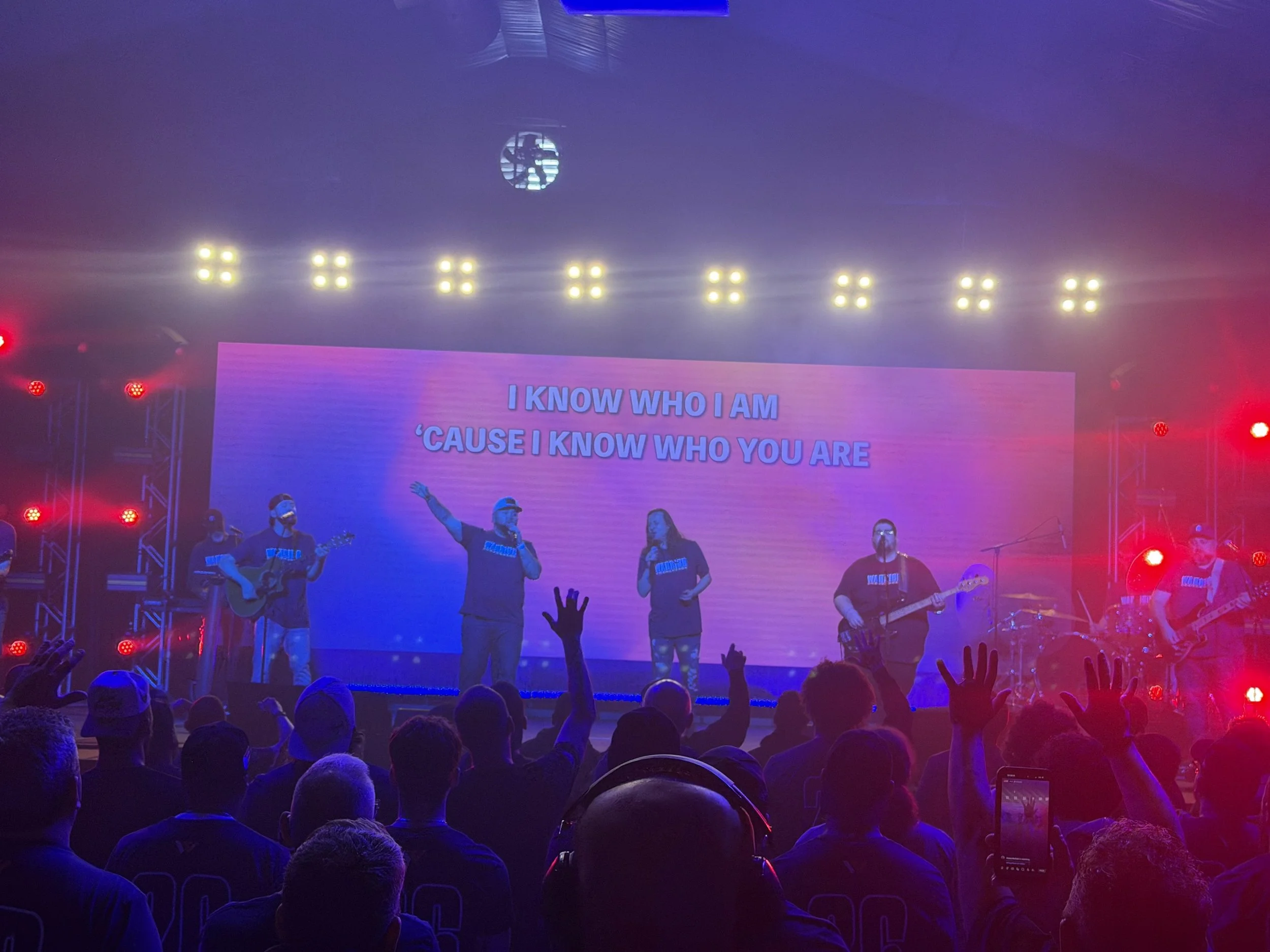
Today’s discussion is being written during a Friday afternoon lull in the annual Warrior Men’s Conference in Waterville Valley, New Hampshire. This is the twelfth year your humble author has attended with other men from church. This year, over twenty of us from Chaffin traveled north together, connecting and (for some) speaking with each other for the first time. That might sound crazy considering we’re not that big of a congregation, but with two services, kids running around on Sunday mornings, it happens. For a time on Sunday and the occasional event there is the possibility of connection. But how often do we have opportunity to spend hours and days together, with no other responsibility on our shoulders than hanging out, playing Wally-ball, worshiping Jesus, and talking?
There is a lot of talking at the Warrior Conference.
Sometimes, these conversations are the start of lifelong friendships. These conversations also change lives. There is a difference between men and women. Yes, there are exceptions but in general, men have a harder time being open about issues we face in life. Some spend their entire lives never talking with anyone about anything more intimate than their favorite player’s lifetime sports statistic. That sentence is truly heartbreaking. In this world of the Internet, smart phones and social media, too many of us surround ourselves with unlimited information, but are utterly alone.
We are not meant to be alone. Less so if we are disciples of Jesus — and if we have surrendered our life to follow the one true King, we are his disciples no less than Peter or John. Because of this, and like those men, we are commissioned to build each other up, share each other’s burdens and spread the Kingdom of God throughout this land. Together.
We don’t build each other up by talking baseball all the time. It might be fun to do, but not at the expense of sharing the most important thing we have in this world: ourselves. Men (and women), you are commissioned by Jesus to spread the Gospel to the ends of the Earth. That includes those people sitting beside you. There is a young man struggling with the loss of a parent, another alone on his knees at home begging for patience and peace with his children, another a respected leader at work but most of the time feeling like an impostor, a husband who wants to treat his wife like a queen but when the moment comes speaks only discouragement and bitterness, another who feels each day as a growing weight on his back threatening to crush him, and he does not understand why.
This might sound dramatic, but it is how men respond internally when we do not feel like we are enough. Yes, our spouses and significant others are critical in helping build up and encourage us. A strong woman is “the crown of her husband,” says Proverbs 12. But men need to have significant, trusting relationships with other men. Solomon says in Ecclesiastes that, "Two are better than one, because they have a good reward for their toil. For if they fall, one will lift up his fellow. But woe to him who is alone when he falls and has not another to lift him up!"
If a man falls, another will be there to lift him up. Some of the conversations going on this weekend in New Hampshire could very well be some one the most important in our lives. Because we are opening up, sharing truths that have until now been held captive in the darkness. There’s a reason we spend so much time at these events in worship, shouting praises along with hundreds of other men. Opening up to God like this opens our hearts, too. We cry out to Jesus. His answer is in the form of the man standing beside us. That’s me. And you.
How do you convince the man having coffee with you to share what is truly holding him down in life? You tell him what is truly holding you down. You “bare your soul” so he feels less reluctant to speak aloud what he has whispered only to himself. Thursday night, the speaker poured out many truths and stories. One important point: the best weapon against our spiritual Enemy is to fall on our knees and repent. Speak out to God and each other where we have failed or - and this is an important point - what we have perceived our failure to be.
Jesus tells Nicodemus in John 3:21 that, “whoever lives by the truth comes into the light, so that it may be seen plainly that what they have done has been done in the sight of God.” This weekend, over twenty men from Chaffin Church have stepped into the light to be sharpened and healed by God, through one of the greatest gifts we have received from him: each other.
Do you want to grow in your walk with Jesus? Then do not walk alone. Find another man whom you see as “having his act of faith together” and walk with him. Don’t kid yourself, though. He struggles just like you. Together, however, you will carry each other’s burden and grow into stronger and more confident disciples of our Lord Jesus.
Together you will bring more men into the light. Amen.
Freedom in Forgiveness
Bear with each other and forgive one another if any of you has a grievance against someone. Forgive as the Lord forgave you.
— Colossians 3:13
Forgive (verb)
for·give fər-ˈgiv fa-get-ə-bowt-it
1 to cease to feel resentment against (an offender) : pardon
forgive one's enemies
2a to give up resentment of or claim to requital
forgive an insult
2b to grant relief from payment of
forgive a debt
Merriam Webster is rather specific about what the word forgive means. Simon-Peter asked Jesus once, “Rabbi, how many times should I forgive a brother? Seven times?” He was showing off and wanted to include a generous answer with the question to show how awesome of a disciple he was. Jesus knocked him down a few pegs by telling his student he should forgive this person, “seventy times seven.” Jesus is not telling us we should forgive four hundred and ninety times, but rather (according to many scholars’ interpretations of the passage) we should forgive always, continuously.
How are we supposed to do that? Since Jesus is telling us to forgive people always, and Paul later reiterates this in his letters, best we take a closer look at Webster’s definition, one point at a time. Remember, too, wherever the word “you” is used, it includes your humble author as well.
1 - to cease to feel resentment against (an offender)
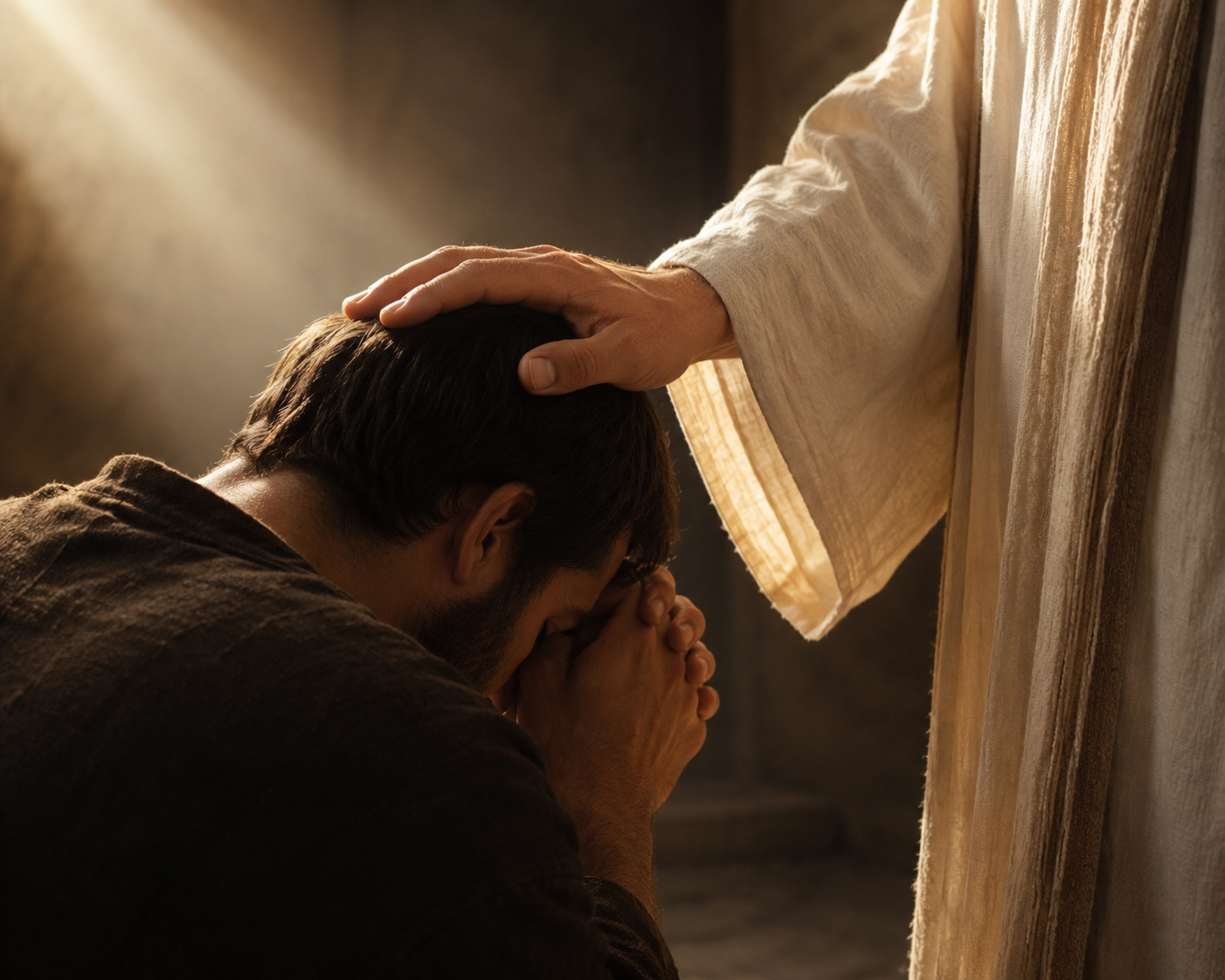
The verb cease means to stop doing something. In this case, being angry at or resenting whoever offended you. Is this act of forgiving something done for your offender? Not at all. In fact, unless you say something, the offender does not know you have forgiven them. They have no real part to play in your forgiveness, not really. You are simply choosing not to feel any more resentment toward them or their actions.
I chose once to forgive someone very close to me who had wronged me in very serious ways. Holding onto the hurt and resentment would only hurt me and my relationship with other people over the long run. It was freeing. The reason I bring this up is because I decided to tell this person that I had forgiven their actions. Their response was, “I don’t need your forgiveness, but if it makes you feel better, fine.” The amazing thing is, when I read that I only felt sorry for them. I knew before this short conversation began that it did not matter if they accepted my forgiveness. I simply wanted them to know that even though our relationship as it once stood might be over, there would be no lingering anger or hatred on my part towards them. In the long run, I think that conversation did help both of us. Regardless, I had been set free of a very heavy burden, one that I’d seen many people over the years be crushed beneath the weight of. Paul doesn’t say you have to be best friends with someone who wrongs you, only that you need to let the hurt inside yourself go. It might take time, but you need to cease feeling (and nurturing) that resentment.
2a - to give up resentment of or claim to requital
2b - to grant relief from payment of (forgive a debt)
These are similar enough to consider together. Here, the verb means give up or relinquish. What are you giving up? Any claim you think you might have to “get even” with the offender. Requital means retaliation. Revenge. An eye for an eye is not part of Jesus’ New Covenant. Love is. Consider this: if you take revenge in some way towards the offender, then you have put yourself inside the same sphere of blame they’ve been trapped in. At that point, all you will have done is begin a spiral of offenses. This is how wars begin.
Is the decision to forgo revenge going to affect the person being forgiven? No, because they don’t know. It does take the pressure off you, however. There is no need to chew on the possibility of retaliation, because it is no longer a possibility. You don’t have to do anything. You are free.
Of course, there are consequences to actions. If the offender breaks a law, there might be jail time. If they damage something of value, there might need to be renumeration (I think that’s the right word). But material consequences aside, there is no debt you or I are owed by them. No one has to do anything. We can simply forgive, live in love, just as our Savior has forgiven us. Then move on. With them or without, but free of any attachment to the offense itself.
The basis of our faith and what carries us through dark times is that Jesus literally went through hell and died so we could be forgiven for everything we’ve done, and will do in the future. Not a lot in this world is worse than what he took on himself for our eternal benefit. We are no better than the crowd shouting “Crucify him!” yet he still forgives us, still loves us. That means more than we might ever understand this side of the veil.
One important question before we part. Who is the person being forgiven?
“Really?” you might say. “I thought we are supposed to forgive everyone!” We are. Everyone. That includes ourselves. You MUST forgive you. I MUST forgive me. Read through today’s discussion again, but this time, imagine that the “offender” is you. More often than should be true, the hardest person for us to forgive is ourselves.
I’m such an idiot! How could I have done that? How could I have said that? Why did I have to take that pill, that drink, watch that video? How could I have said those words to my spouse, or my kids. You are weak. You are a foolish old crumb who can’t get along with people. You pompous, egotistical… people are going think you’re…. Why aren’t you better at….
The Bible describes the tongue as a sword that builds up life or gives death. The same can be said of the inner dialog we have inside our minds. We say the cruelest things to ourselves. If we are told in today’s verse to “Bear with each other and forgive one another if any of you has a grievance against someone. Forgive as the Lord forgave you.” Perhaps, we should also read that as, “Bear with and forgive yourself for messing up. Forgive yourself as the Lord forgave you.”
It’s very hard to become the person God wants us to be if we hold resentment and anger towards every mistake and poor decision we have done. We are “fearfully and wonderfully made” by the Creator of the universe. So is our brother and sister. Remember how Jesus sees them, and us, and be ready to let go of the hurt and resentment that insists on being given life in this broken world. Forgive, then be free to go on living for Him.

Dancing with Patience and Grace
And we urge you, brothers and sisters, warn those who are idle and disruptive, encourage the disheartened, help the weak, be patient with everyone. 1 Thessalonians 5:14
Some of us might read this week’s passage and think, perhaps cynically, “Oh is that all we have to do, just be patient with everyone? No problem!”
This seems impossible because you focused only on the last part of his plea. Yes, Paul did say to be patient with everyone because patience is a powerful gift of the Spirit. God’s patience is infinite. Yours and mine are limited, and that limit varies depending on how well we’ve slept or eaten. Connecting with each other in patience, however, invariably results in better communication, and empathy.
What the apostle Paul is not telling the folks in Thessalonica is to ignore opportunities to build up our brother or sister.
Is the man sitting beside you wasting his God-given talents or, conversely, using them to stir up problems (intentionally or not) in the church community? Love doesn’t mean you should leave people where they are. Love, in the context of living the Kingdom life with each another, means doing or saying, with Love, what might be necessary to help this man see what he might be doing (or not doing), and walk with him as he turns in new, better directions.
Has the woman you’re studying with over coffee been feeling discouraged? Has she hit a place in her life where she’s walked away from her first love: that excited, euphoric state of yearning to be closer to Jesus and do His will?
Is the man or woman in these examples you?
In a world populated by human beings that are far from perfect, people will struggle for the strength to find their way sometimes. They don’t always have the will or tools to fully realize their God-given potential, or to discover what their Calling from Jesus might be as they follow him. Sometimes this person is us, and we pray that someone might come alongside us, offer good advice, lend a hand, or simply listen. When we’re on top of the world and feeling like whatever God says, we’re there in full metaphorical armor, a part of our calling as followers is to come alongside others who might be stepping more uncertainly, share advice, lend a hand when one is needed, or simply listen.
Imagine all of this as a dance, a sharing back and forth: giving away the Love Jesus gifted to us, and receiving it gratefully back from others. Dancing is rarely graceful when we first learn the steps, but if we practice every day, with patience and Grace, it can truly be a beautiful thing to see.

The Light Beyond the Wall
But if we walk in the light, as he is in the light, we have fellowship with one another, and the blood of Jesus, his Son, purifies us from all sin. 1 John 1:7
There is a scene from the movie version of PINK FLOYD’S THE WALL (1982), where the main character, Pink, has hit rock bottom with drugs and violence and dwelling too long on his many childhood scars. It’s a dark story, about a broken man hiding away eventually inside his mind (the metaphorical wall). He sits in a dark hotel room, so still that the ash from the cigarette between his fingers burns all the way down without falling. I think of this image a lot, especially when we as Jesus’ followers talk about living together in the light.
Living, together, in the light.
Bob Geldof’s fictional Pink personifies the opposite of this. In the end, he is alone in the dark. If you and I are being honest, we’ve been there once or twice (or more) in our lives.
That’s the beauty of gathering together on Sunday as worshipers reaching for our Savior, and once a week in our smaller, more intimate groups. In today’s verse, John writes how urgent it is to walk in this light. Jesus has always done this. During his time here as a human He spent a lot of time bringing people (and spirits) out of dark places into the light of his kingdom.
Walking in the light.
We sit a lot in church, true, and when we get together for other reasons, too, but we are not called to sit in the light all day (beach vacations notwithstanding). The apostle John tells the Church that if we walk in the light and have fellowship with one another - in other words if we walk in the light together as the family of God, Jesus will purify us. That’s what happened, in fact, when we stepped out of our own darkness to follow Him.
Finally, walking is an action.
How do we walk in the light? We live our lives opened like a book for all to see. We’re broken people saved by Grace, meeting with similarly-busted brothers and sisters, and we do it with joy and laughter. We see someone in need, we walk over to them and share our light. Sit with them, listen, talk and pray with them.
Here’s the thing: joy, laughter, serving others, sharing a kind word, visiting the sick, praying for your children, cooking dinner when all you want to do is take a nap - all of this is light. Jesus uses the light in each of us to draw out those people sitting in the dark; our brothers and sisters lost behind their self-imposed walls.

A Very Boring, Colorless Kingdom
Once upon a time there was a magical kingdom where everyone agreed on everything. Every peasant, knight, and royal baker enjoyed the same stories, played the same games (following the same rules), and enjoyed the same food. Every election, the winning candidate won unanimously. Even the people who lost didn’t vote for themselves.
I appeal to you, brothers and sisters, in the name of our Lord Jesus Christ, that all of you agree with one another in what you say and that there be no divisions among you, but that you be perfectly united in mind and thought. 1 Corinthians 1:10 NIV
Once upon a time there was a magical kingdom where everyone agreed on everything. Every peasant, knight, and royal baker enjoyed the same stories, played the same games (following the same rules), and enjoyed the same food. Every election, the winning candidate won unanimously. Even the people who lost didn’t vote for themselves.
It was a very boring, colorless kingdom.
Diversity of attraction, taste and opinion fills our community with novelty and excitement. It adds flavor to the cold stew of our lives. It is the cornerstone of learning. Given all that, why would Paul tell the folks in Corinth — and so fervently — that they all must “agree with one another in what you say and that there be no divisions among you…”? Maybe he simply likes cold stew.
His point wasn’t that every follower of Jesus agrees on everything, only on what matters. In later verses he talks about infighting within the house churches over who was the better leader (Paul, Apollos, Peter (aka “Cephas”). In today’s world, from minor matters of baptism style (infant or adult, full immersion or sprinkling over the head), to intense arguments over who even should be allowed through the front doors, we spend our time debating (and for some of you, these debates use up all of your spiritual energy) over matters that don’t matter when compared to how best can we help every person follow the one true King, Jesus.
This is the beauty of our Connect 4 groups. Within our small corner of God’s Kingdom, many of us are now getting together every week to study the Word and point each other towards Jesus. As we do this, we learn more about each other’s likes and dislikes, music and food preferences, even who puts on one sock and one shoe first before moving to the other foot. We revel in, laugh about and at times get annoyed by each other’s differences. It is these differences, however, that over time reveal our hearts. When you and I get to know and love these real people sitting down with us, we finally understand that there is, truly, one important goal in life: to work out the best path for each of us to follow Jesus into eternity.
These paths are paved one verse, one conversation, one prayer given or received, at a time. It’s a lifetime journey. Many of us have been trying to lay down these stones by ourselves. The best gift you and I can receive is to allow a brother or sister to walk alongside us; someone who will keep us aimed in the right direction; someone who will learn from us as we learn from them.
At the same time, we can also debate Larry Bird versus Magic Johnson, Camille Pissarro versus Claude Monet, or if Han shot first.
As long as we remember that, in the end, the one thing we must agree on is to stay on the path that leads to Jesus... and do it together.
Grave Clothes, week 5
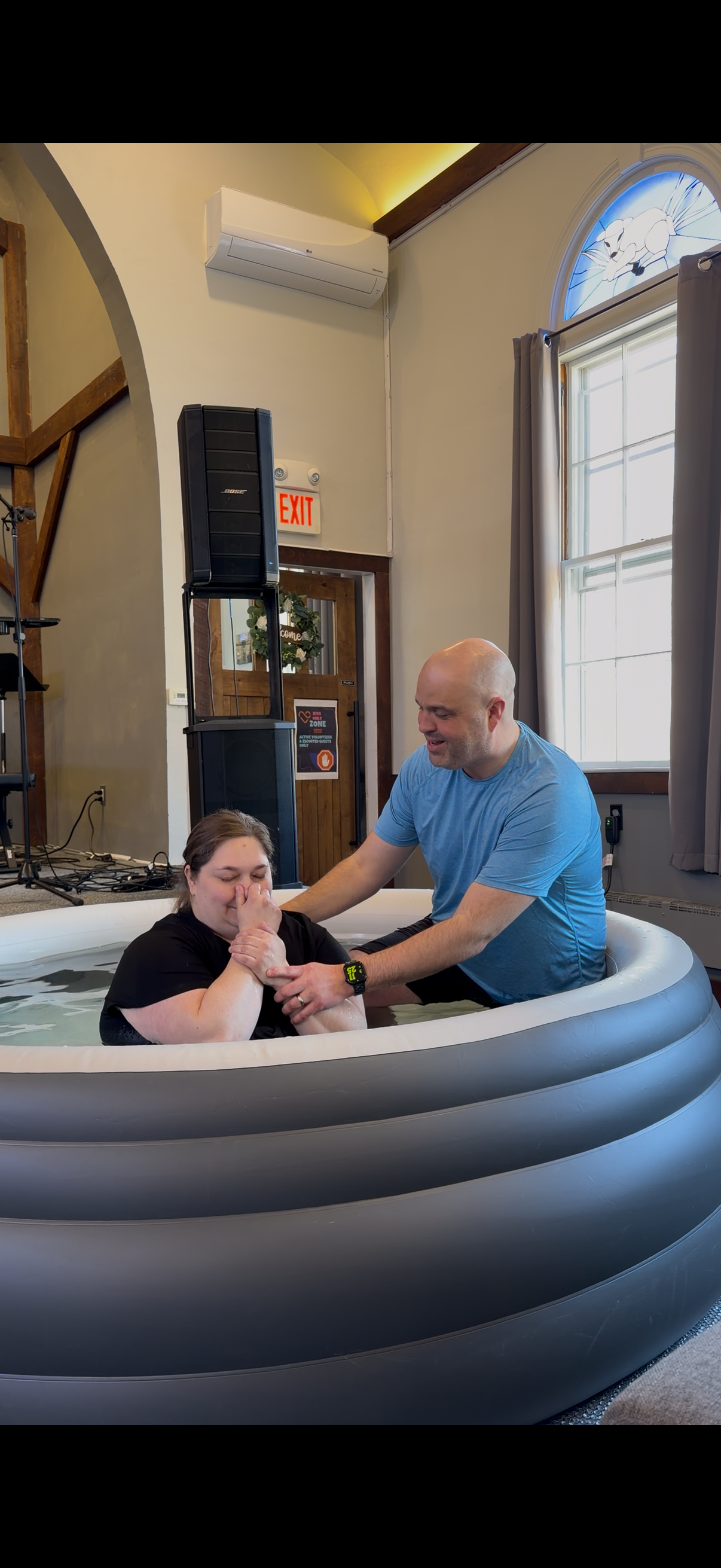
We’re now in week five of our series on grave clothes. Paul gives us a sobering list of what those grave clothes look like in practice: sexual immorality, impurity, lustful pleasures, idolatry, sorcery, hostility, quarreling, jealousy, outbursts of anger, selfish ambition, dissension, division, envy, drunkenness, wild parties, and other sins like these.Consider that a little gift for all of us — in case anyone was feeling overly judgmental about other people’s sins.When I was growing up, church followed a predictable order. I’d dress up (and get scolded if I skipped the tie), we’d sing hymns like “Bringing in the Sheaves” (still not sure what a sheave is), the pastor would preach, and we’d close with an altar call set to songs like “Just As I Am” or “I Surrender All.” Most weeks, no one actually came forward, but the routine was comforting.Many of us grew up with our own version of that liturgy. Whether it was a traditional Protestant service or a Catholic Mass, you knew what to expect when you walked in. There’s something beautiful about rhythm and tradition — until it stops serving people and starts serving itself.Here’s the uncomfortable truth: When any human system — including the church — stops serving people and starts serving its own structure, it will always choose safety and tradition over sacrifice.Tradition makes a wonderful servant but a terrible master.Let me take you back to first-century Israel. By the time Jesus arrived, the people were desperate for a king like David — someone who would ride in with a sword, overthrow Rome, and restore their independence. Many of the disciples, including Simon the Zealot and Judas, carried that same expectation. They wanted a conqueror.But Jesus kept warning them. Over and over — at least ten times in the Gospels — He prophesied the coming destruction of Jerusalem. In Luke 19, as He approached the city, He wept:
“How I wish today that you of all people would understand the way to peace. But now it is too late, and peace is hidden from your eyes. Before long your enemies will build ramps against your walls and encircle you and close in on you from every side. They will crush you into the ground, you and your children with you. Your enemies will not leave a single stone in place, because you did not recognize it when God visited you.”
Jesus came to show us a completely different way — a new way to be human. Genesis 1–2 reveals God’s original intention: that we would care for and cultivate the earth. Sin broke that, and ever since, humanity has tried to fix the problem through our own strength.To avoid suffering, we build safety mechanisms. Those mechanisms harden into structures and systems. And those systems, left unchecked, eventually make other people suffer. The only way to break the cycle is sacrifice.Think of Braveheart. Tribal peoples came together for safety, forming nations and kingdoms. Bad leadership turned those structures into tools of oppression. Someone had to sacrifice — even to the point of death — for freedom to have a chance.The same pattern shows up in the church. We start gatherings because people are living apart from God and need community, spiritual health, and safety. Over time, good intentions can calcify into rigid traditions and rules. We protect the structure so fiercely that we sometimes overlook the hurting people right in front of us. Changing that culture always requires someone willing to sacrifice.Israel’s story is the ultimate example. God called Abraham to faith in one God. To keep His people close, He gave them the Law. But over centuries, 613 rules became heavy burdens enforced by the spiritual elite, causing suffering instead of freedom. So God sent His Son — the ultimate sacrifice — to throw off the grave clothes of self-righteousness and bring grace instead.Grace is threatening to the self-righteous and incredibly inviting to everyone else.Jesus is the prototype of the kind of human God always intended. In His death, He showed us that suffering is both the consequence of evil and the antidote to it. He fulfilled God’s intentions through sacrifice.Paul puts it plainly in Galatians. Some were telling new believers they still needed to follow all the old rules — including circumcision — to be truly saved. Paul pushes back: “If I were still preaching that you must be circumcised… why am I still being persecuted?” The gospel isn’t a religion of safety. It’s the royal announcement that the crucified and risen Jesus is Lord of the world.Worshiping the safety of empire, denomination, political party, or even “American Christianity” is found wanting. Real salvation calls us out of every false security and into a life of grace, repentance, and faith.That brings us to Romans 12:1-2:
“And so, dear brothers and sisters, I plead with you to give your bodies to God because of all he has done for you. Let them be a living and holy sacrifice — the kind he will find acceptable. This is truly the way to worship him. Don’t copy the behavior and customs of this world, but let God transform you into a new person by changing the way you think. Then you will learn to know God’s will for you, which is good and pleasing and perfect.”
Paul contrasts two ways of living. One list looks like the grave clothes: sexual immorality, impurity, lust, idolatry, hostility, quarreling, jealousy, anger, selfish ambition, division, envy, drunkenness, wild parties, and more.The other list is the fruit that grows when we let God transform our thinking: love, joy, peace, patience, kindness, goodness, faithfulness, gentleness, and self-control.Here’s the challenge: If following Jesus hasn’t cost you anything lately, you might still be wearing grave clothes instead of throwing them off.
When you cling to lust, real love becomes difficult.
When you live in quarreling, peace feels impossible.
When anger rules, patience seems light-years away.
When you chase wild living, self-control stays out of reach.Jesus wasn’t trying to create “goody two-shoes.”
He was creating little Christs — people who live the way He lived. That path always involves sacrifice. It means loving your enemy instead of hating them. It means choosing humility over being right. It means laying down your preferences for the sake of God’s original intention for His creation.Salvation isn’t just about escaping this world and leaving others behind. It’s about following the way of the crucified and risen Jesus — presenting our bodies as living sacrifices.It’s hard. We all mess up. But that’s exactly why grace exists. None of us are perfect, yet God keeps inviting us to walk in new life and resurrection power.So let me ask you: What is following Jesus costing you right now?